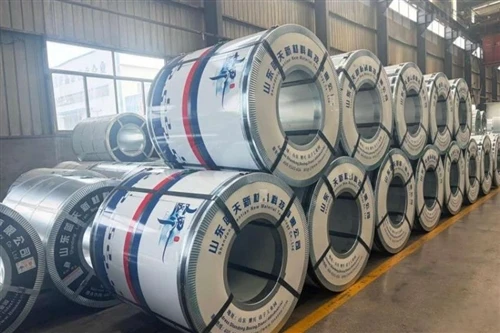
Thanks to their properties-such as being lightweight yet strong, providing thermal insulation, and offering fire resistance and noise reduction-sandwich panels are used across a wide range of sectors:
Construction Sector
Industrial and Warehouse Buildings: Widely used for the roofing and wall cladding of steel-structure factories and logistics warehouses; they balance thermal insulation, load-bearing, and fire safety requirements while reducing energy consumption during production and operations.
Cold Chain and Food Processing: Cold storage panels-featuring polyurethane cores-are the primary enclosure material for various high- and low-temperature cold storage facilities and food processing plants, capable of maintaining stable low-temperature environments down to -45°C.
Public and Temporary Buildings: Suitable for large-span enclosures in major venues and airport terminals; also used for modular site offices, cleanrooms, and fire-resistant partitions in office buildings.
Transportation Sector
Rail Transit and Aviation: Honeycomb sandwich panels are used in the bodies and interiors of high-speed trains and aircraft, enabling a 25% reduction in vehicle weight while meeting flame-retardant and sound-insulation standards.
Vehicle and Marine Manufacturing: Applied in automotive interiors, cargo compartments, and ship bulkheads; they reduce self-weight while enhancing structural strength and impact resistance.